
Gatherings
Events & Qawwali Chai
QAWWALI CHAI
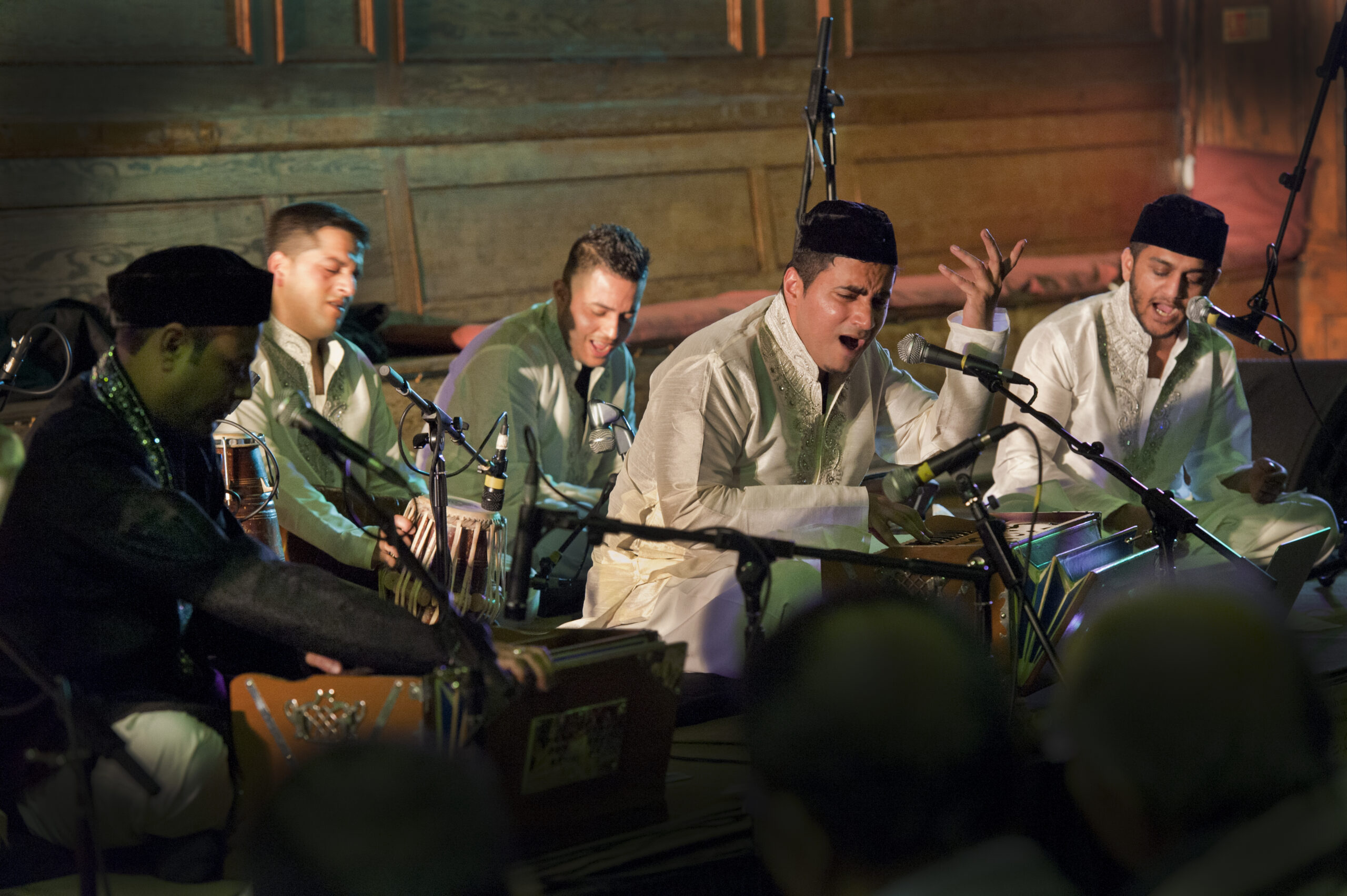
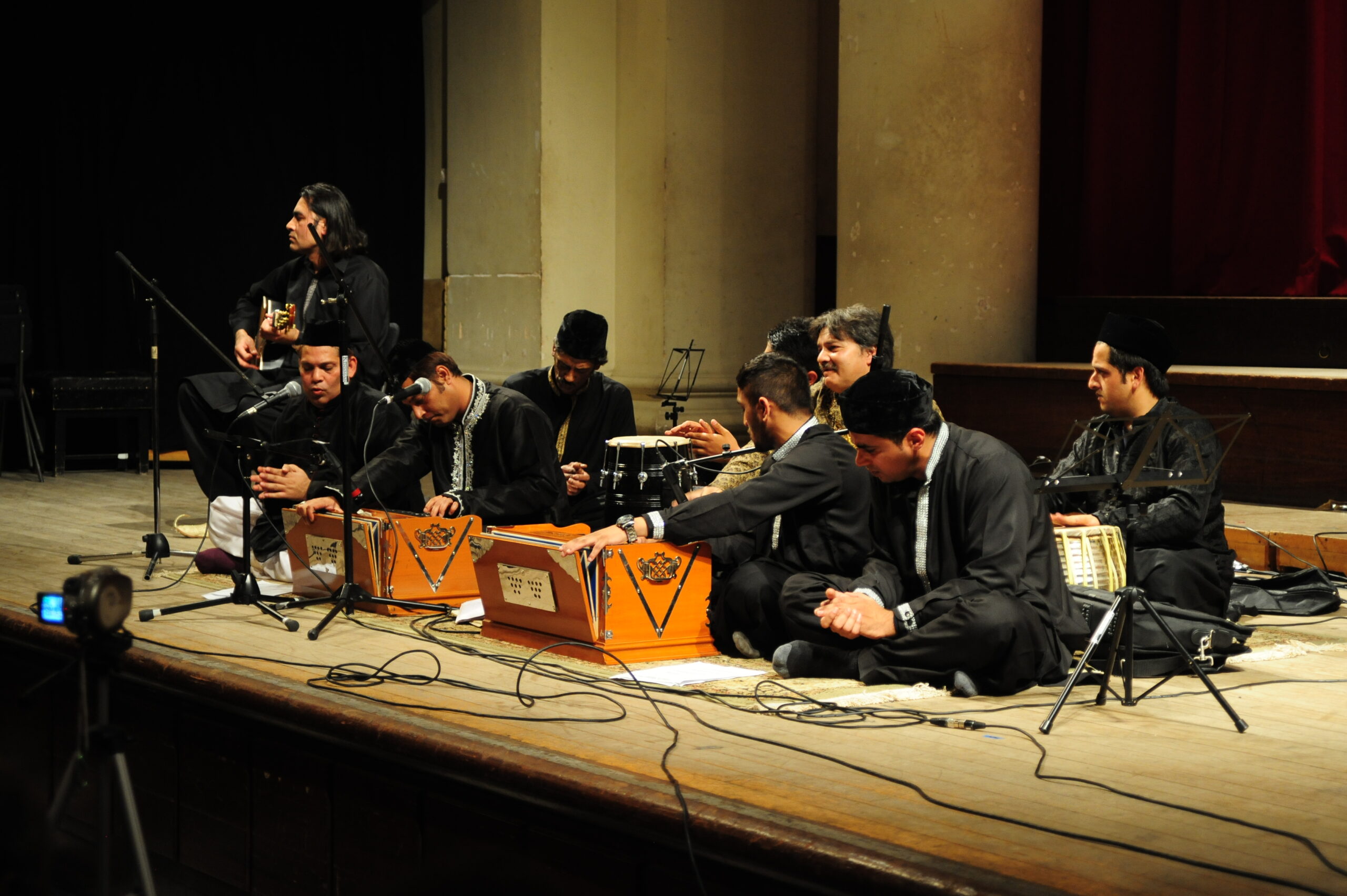
ISRA Books regularly holds concerts of traditional and fusion Sufi music from South Asia.
Sufi music is part of a centuries-old tradition of Islam. This tradition focuses energy on spiritual development.
“Sufism” (Arabic Tasawwuf) is a word which probably has its origin in the wearing of undyed wool (suf) as a mark of personal penitence. The Sufis are also known as fakirs and dervishes, both words originally denoting that these were people who believed in being poor. The use of music as a spiritual force was discussed at great length by al-Gazali (1085-1111) and towards the end of the 11th century there arose the tradition of the sama, a spiritual concert which usually included a singer and instrumentalists.

Sufism also emphasises personal experience of the Divine rather than focusing solely on the teachings of religious scholars. Sufis may also be members of either the Sunni or Shi’a branches of Islam.
Qawwali is a traditional form of Islamic song found in Pakistan and India that dates back more than 700 years. The Holy Quran instructs man to remember God and this remembrance, known as dhikr, may be either silent or vocal. Qawwali may thus be understood as an elegant vocalisation of this remembrance.
Qawwali is performed in a simple verse-and-chorus format. The qawwal carries each verse, passing his lines to the other singers. As each verse builds to a climax, the singers passionately return to the chorus, over and over again, for up to twenty minutes. Words are repeated until they lose their meaning, leaving only the music and the remembrance behind.
Qawwali is closely linked to the devotional life and is sung in praise of God Almighty, the Prophet of Islam and the saints, the friends of God Almighty, all set together within the theme of love.
The words of Qawwali are sung repeatedly with variations intended to bring out their deeper meaning. The words are repeated over and over to the point where they cease to have any meaning. The purpose of this is to draw both singer and listener into that trance-like state known as hal. Ideally, those participating are then drawn into a state of spiritual enlightenment known as fana or ecstasy.
The underlying message of Qawwali is one of love, peace and understanding. This is made clear by the fact that Sufi saints are still revered today by Hindus, Muslims and Sikhs alike. For centuries Qawwali has been inspired and propagated by the Chisthi school of Sufism and, although it is of Indo-Pakistani origin, today it is loved and practised all over the world.
CHAI
Chai is that hot tea beverage enjoyed throughout South Asia and beyond. Tea plays an important role in encouraging dialogue all round the world and South Asian people drink chai together and talk to each other several times a day.
The British East India Company started the commercial production of tea in then-undivided India in the 19th century.
Just as in Britain, the afternoon chai is often accompanied with snacks. As it is with eastern culture, chai is a sign of hospitality. If you prefer to have your chai the British way, that is black tea with a spot of milk, you are likely to be considered a Wilati or foreigner in India and Pakistan.

THE ORIGINS OF TEA-DRINKING
Legends relating to the origins of tea-drinking have been passed down from generation to generation. One of the most popular of these legends dates back to 2700 BC and to the reign of the Chinese Emperor Shen Nung.
Shen Nung was known to be a skilful ruler, a creative scientist and a patron of the arts. His far-sighted edicts required, among other things, that all drinking water should be boiled for hygienic reasons.
One day in summer, while visiting a distant region of his realm, he and his courtiers stopped to rest. In accordance with his ruling, the servants began to boil water for the company to drink. Dried leaves from a nearby bush happened to fall into the boiling liquid. As a scientist, the Emperor was interested in the results, drank some and found it very refreshing. So, according to legend, that was how tea was invented.
Tea and coffee houses act as centres for social interaction, providing people with a place to congregate, talk, write, read, entertain one another or pass the time, whether individually or in groups.
Qawwali Chai is a unique platform that transcends cultural differences and exemplifies the strongly interconnected world of today. It combines the pleasures and purposes of both Sufi music and the drinking of tea together.
OPENING THE HEART
Through pleasant interaction of this sort, people from very different backgrounds may find that values and beliefs that are dear to them are also shared by other faiths and cultures. Relaxing the mind and opening the heart together may bring both peace and understanding. The heart is a garden where the gardener may cultivate compassion or fear, resentment or love.