
Explore Our Books
Books Published
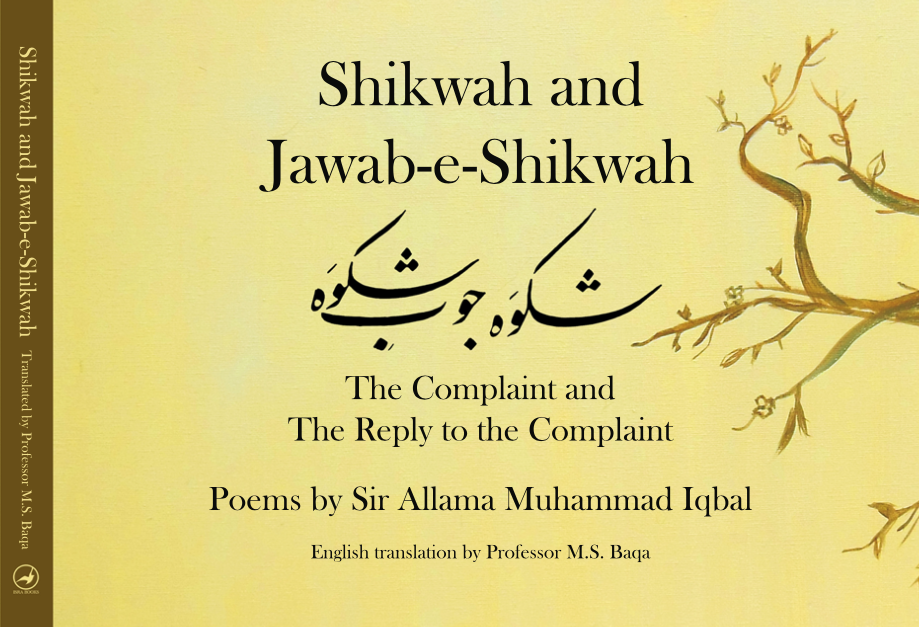
“Shikwah” and “Jawab-e-Shikwah”
The complaint and the Reply to the Complaint
First Impression
ISRA Books are proud to publish their first book, “Shikwah” and “Jawab-e-Shikwah” by Sir Allama Muhammad Iqbal, in a hand-bound paperback volume on high-quality paper containing both the original Urdu transliterated into the Roman alphabet and a modern English version suitable for reading aloud. The scholarly translation is by Professor Muhammad Sharif Baqa, adapted and made rhythmic by Maggie Blenkinsop.
We at ISRA Books felt there was a strong need for a more accessible version of these important poems, both for those who have a knowledge of spoken Urdu without the ability to read Urdu script and for those who understand modern English without having studied the literary language. Maggie Blenkinsop has helped produce a translation that is sufficiently rhythmical to be read aloud, as practised by the poet himself when the works were first written. We are grateful to Professor Baqa for allowing us to make use of his text in this way and hope that the result will be a still wider audience for the works of the great poet.
Second Edition
ISRA Books is proud to present the second edition of a contemporary translation of Sir Allama Muhammad Iqbal’s famous poems, “Shikwah” (Complaint) and “Jawab-e-Shikwah” (Reply to the Complaint).
In the Complaint Iqbal remonstrates with God Almighty, expressing great pride in the past achievements of the faithful.
For the second edition we have incorporated the original Urdu text as well as replacing the previous transliteration text. It is hoped that readers will approve and find more ease with this new transliteration.
We have tried to maintain the same quality of production in this new edition.
“As wayfarers, we were constantly travelling in the world,
Goblets filled with the wine of Thy Oneness, we preached everywhere.
We spread Thy message beyond every mountain and forest.
O Lord, is it in Thy Knowledge, for we never failed,
We traversed not only forests but also rivers,
With full fervour, we galloped our horses into the Atlantic Ocean.”
At the same time, in The Reply to the Complaint, he forces his readers to reflect on their participation in the woeful situation previously complained of. Instead of celebrating past glories, the faithful are forced to reconnect with the essence of their role on earth as viceroys of the Almighty.
In the final stanza of “Jawab-e-Shikwah”, the poet sets out in simple terms the reward that awaits those who remain faithful to the Beloved’s call.
“Intellect is your shield, and love your sword.
My dear dervish, vice-regency of the world is here at your command.
Your clarion call of “God is Great” shall be your burning flame.
If you are truly Faithful, then your intent will shape your destiny.
Be sincere to the Beloved, then We are surely with you.
This world is nothing for the tablet and the pen will be your prize.”
Author
Professor Mohammad Sharif Baqa was born in Lahore, Pakistan on the 14th March 1934. He showed a keen interest in writing both poetry and prose from an early age and gained his master’s in English from Punjab University in 1961. Shortly after that he came to England where he founded the Iqbal Literary Society and later Majlis-e-Iqbal, London to promote the poetry and philosophy of Allama Iqbal. Since then he has started up magazines, published more than 50 books, regularly broadcast on television and been recognised as the foremost living authority on the works of Iqbal.
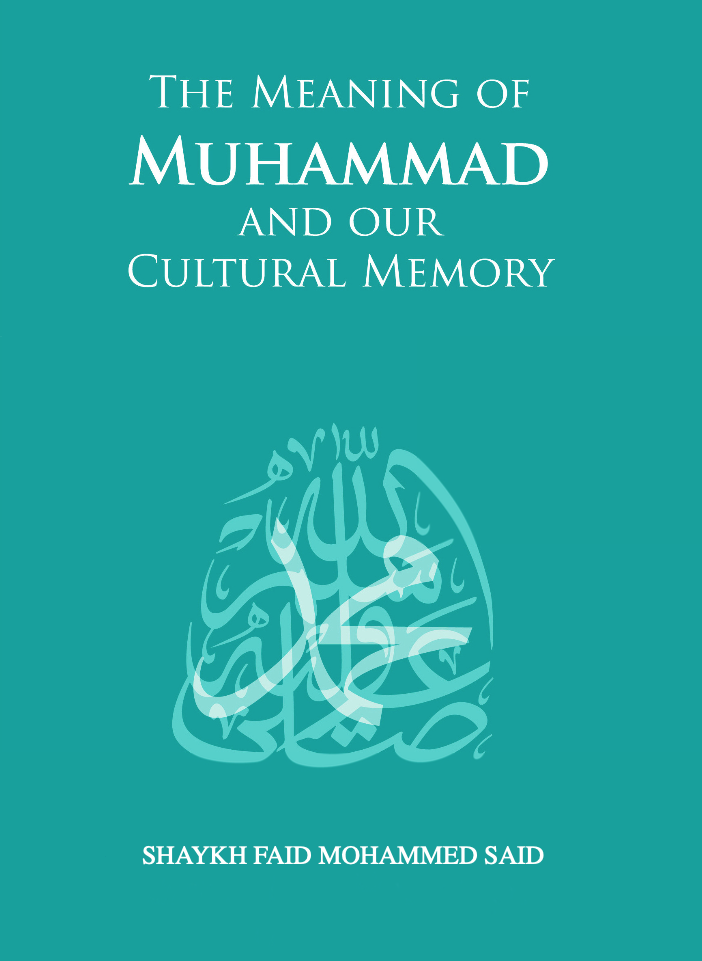
The Meaning of Muhammad and Our Cultural Memory
In this book Shaykh Faid Mohammed Said reminds readers of the authentic culture of Islam, with frequent reference to the Quran and the Hadith. He quotes the many benevolent deeds and words of the Prophet towards everyone, including those of other religions, and demonstrates that the essential nature of Islam is kindness and compassion towards the whole of humanity. He points out that if God had wished everyone to be the same He could have created them that way but He did not.
The River of Light
The River of Light is a guide that weaves together spiritual insight and practical wisdom for both faith and daily living. In Islam, light carries a profound meaning — a symbol of divine guidance, clarity, and truth. The Qur’an describes God as “the Light of the heavens and the earth,” and speaks of the Prophet as a light sent to illuminate the path for humanity.
A river evokes movement, renewal, and continuity — water that flows without pause, cleansing and giving life wherever it passes. Together, these images form a powerful metaphor: a continuous stream of divine guidance that nourishes the heart and shapes the believer’s journey.
This book invites readers to step into that flowing light — to reflect, to grow, and to rediscover the spiritual clarity that runs through every moment of life.
Values that do not “fast”
A Ramadan Journey of Self-Purification
A reflective exploration of the sacred month as a pathway back to clarity, discipline, and inner peace. This journey invites the heart to slow down, the mind to soften, and the soul to realign with its highest purpose. Through fasting, gratitude, and intentional stillness, it becomes a month‑long cleansing — not just of the body, but of habits, thoughts, and attachments that weigh us down. It’s a reminder that renewal is possible, that transformation begins within, and that every dawn offers another chance to return to who we were always meant to be.
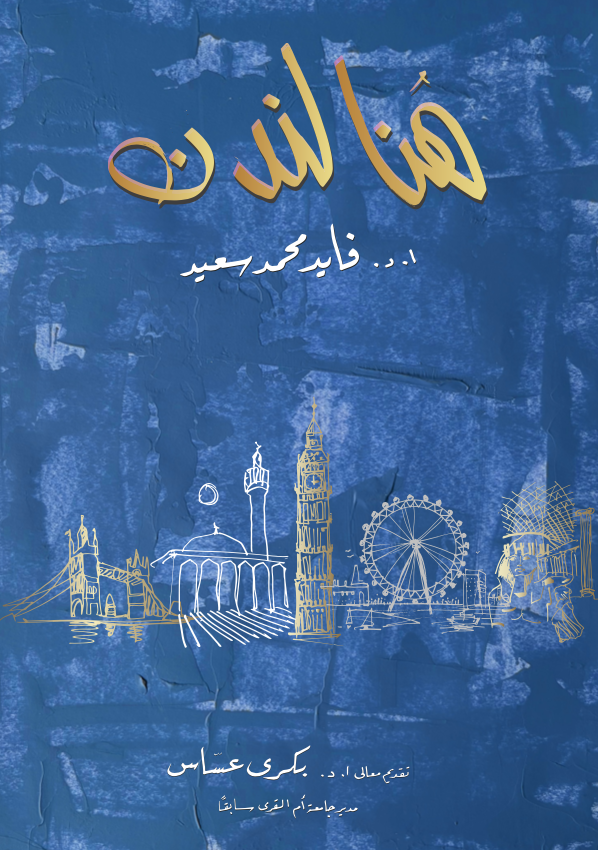
Hunna London Diaries
Author
Shaykh Faid Mohammed Said was born and grew up in Eritrea, where he was educated and looked after by Shaykh Hamid, the Senior Judge of the Shari’ah Court in Asmara. While he remained in Eritrea Shaykh Faid was fortunate in being able to study under some of the greatest scholars in the country. He later moved to Medina where he continued his studies under Shaykh Atiyyah Mohammed Salim, the Resident Scholar of the Prophet’s Mosque and Senior Judge of the city. The Shaykh studied at the Islamic University of Medina where he gained his BA in Arabic Language.